Rates last updated: 12 November 2026 · How we verify
Why Your Bank or Revolut Asks for Your PPSN and Tax Residency in Ireland
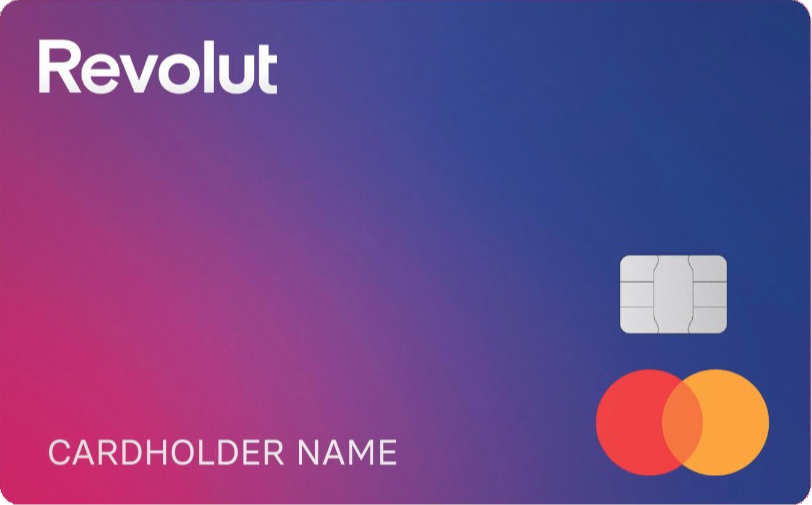
Revolut · Standard plan
- Irish IBAN (IE) for salary and bills
- No monthly fee on the Standard plan
- Deposits protected up to €100,000

You open the app to pay for lunch and it wants to know where you're tax resident and what your tax number is. It feels intrusive, and it's exactly what a phishing message would ask. In most cases it's neither a tax audit nor a scam: banks are legally required to collect a self-certification of tax residence from account holders, and in Ireland the tax number is your PPSN.
- Expect the question soon after you open your Revolut account here: every bank must ask it, so it's a legal requirement, not a Revolut quirk.
- The rule behind it is the Common Reporting Standard: banks must record where each account holder is tax resident.
- Tax resident only in Ireland and not a US citizen? Revenue says nothing is reported under these rules.
Why does your bank ask where you're tax resident?
- The Common Reporting Standard (CRS), applied in the EU through DAC2, obliges banks to identify non-resident account holders.
- For accounts opened after 31 December 2015, the bank must get a self-certification from you.
- FATCA is the separate US version: it looks for US citizens and US tax residents.
Revenue's page on what FATCA and the CRS mean for an account holder puts it plainly: financial institutions are obliged to collect and report certain information to their tax authority. For new accounts, the institution asks you for a self-certification of your tax residence or citizenship and, if you're resident elsewhere or a US citizen, your Tax Identification Number (TIN) in that country. For older accounts it can rely on its records, though it may still ask.
The standard was written by the OECD and is applied across the EU by a directive known as DAC2, which Revenue describes on its CRS and DAC2 page. Banks, brokers and other financial institutions all fall under it, which is why the same question follows you from one provider to the next.
| Your situation | What happens to your account data |
|---|---|
| Irish tax resident, not a US citizen | Revenue says no further action is taken and nothing is reported |
| Tax resident in another CRS country | Reported to Revenue, which shares it with that country |
| US citizen or US tax resident | Reported to Revenue for exchange with the US under FATCA |
For someone tax resident elsewhere, Revenue lists what is passed on: name, address, foreign TIN and account number, date and place of birth if on record, the year-end balance, and payments during the year such as interest. US citizens are asked for a US tax number as well; our guide to tax for Americans in Ireland covers the US filing side.
Why does it want your PPSN as well?
- The PPSN is Ireland's tax identification number, so it's the TIN an Irish resident gives.
- Savings interest brings DIRT at 33%, and the provider needs your tax details to handle it.
- Revolut says interest on its Instant Access Savings is subject to DIRT, so have your PPSN ready before you open it.
Two different rules meet in the same form. The first is the CRS: self-certification forms generally ask for a tax number for each country you list, and for Ireland that number is the PPSN. Revolut's help page, for example, says it may require a tax identification number depending on your country. The second is Irish deposit interest. A provider that pays you interest generally deducts Deposit Interest Retention Tax and accounts for it to Revenue, and it needs to know who the saver is.
Revolut's Irish help page on Instant Access Savings says the interest is subject to DIRT at the prevailing rate, as published on 12 November 2026. The product pages we read didn't spell out who can open it, so check the eligibility shown in the app; expect to need Irish tax residence and a PPSN on file. How the tax on that interest works, and when you'd still need to declare something, is in tax on Revolut savings interest.
Your PPSN is sensitive. Give it only where there's a legal reason to ask: Revenue, the Department of Social Protection, your employer, and financial institutions for tax reporting are the usual ones.
What does 'tax resident in Ireland' actually mean?
- You're resident if you spend 183 days or more in Ireland in a tax year.
- Or 280 days or more over the current and previous tax year together.
- With 30 days or fewer in Ireland in a tax year, Revenue says you won't be resident for that year.
The tests are on Revenue's tax residence page. The tax year is the calendar year, 1 January to 31 December. You're present for a day if you're in Ireland for any part of it; time spent airside in an airport or port doesn't count.
- 183-day test: 183 days or more in the tax year.
- 280-day test: 280 days or more adding the current and the preceding tax year.
- 30-day rule: Revenue says you will not be resident if you're here for 30 days or less in a tax year.
- Election: if you arrive intending to be resident the following year, you can elect to be resident in the year of arrival by telling Revenue in writing.
Residence for tax isn't decided by citizenship, your immigration stamp or where your IBAN is from. A person on a work permit who spends the whole year in Dublin is Irish tax resident.
What if you're resident in two countries, or have no PPSN yet?
- List every country where you're tax resident, with the tax number for each.
- No PPSN yet? Say so honestly and add it when it arrives: don't invent a number.
- Update the form when your circumstances change, such as the year you become Irish resident.
The self-certification isn't limited to one answer. In the year you move, two countries may each treat you as resident under their own rules, and the form expects both, with a TIN for each. Which country gets to tax what is then a matter for the double taxation agreement between them, not for the bank. See cross-border taxes when you move to Ireland.
Newcomers hit a timing problem: the app asks on day one, and a PPSN can take a few weeks. You apply to the Department of Social Protection, online through MyWelfare, and you generally need identification, proof of your address and a reason for needing the number, such as a job offer. The steps, and which accounts you can open before the number arrives, are in our guide to opening a bank account in Ireland. Revolut, for instance, offers an exemption option for students and interns who have no local tax number yet, but says at least one tax residence with its tax number must still be declared to keep the account open.
- Answer for today. If you've just arrived, your country of tax residence may still be the one you left; give that country's tax number.
- Add Ireland when it's true. Once you meet a residence test or elect to be resident, update the form with your PPSN.
- Keep it consistent. What you tell the bank should match what you tell Revenue and your home tax authority.
Revenue's guide for account holders has more on the exchange of information.
What happens if you ignore the request, and is it a scam?
- Revenue's page doesn't set out a penalty for the customer; the consequences come from the provider's terms.
- Revolut says it closes accounts when the required tax information isn't given on request; check the deadline in your app.
- A genuine request lives inside the app or online banking. A link in a text asking for your PPSN is a red flag.
The obligation sits on the financial institution, which can't simply skip customers who don't reply. What it does next is a matter for its own terms: reminders, limits on new products, restricting or closing the account. Revolut's help page on tax information is blunt: the account will be closed if you fail to provide the required tax information when requested, by an automated decision you can dispute with its support team on chat. We couldn't find a fixed deadline there, so rely on the date in the in-app message rather than on this article.
Because the genuine request asks for exactly what a fraudster wants, check the channel before you answer.
- Open the app yourself. Don't follow a link. If the request is real, it will be waiting in the app or in your online banking.
- Expect a form, not a conversation. A tax residence form asks for country and tax number. It doesn't ask for your card PIN, a one-time passcode or your full password.
- Distrust urgency. "Your account will be closed today" in a text message is pressure, not procedure.
- Never move money. No tax form requires a transfer to a "safe account".
If you've already typed details into a page you're unsure about, act quickly: our guide to bank scams in Ireland lists who to call and in what order.
Worked example: a newcomer's first 90 days
- Raluca arrives from Romania on 1 September 2026 to start a job in Limerick.
- She's in Ireland for 122 days in 2026: under 183, so not resident that year unless she elects.
- In 2027 she needs 158 days to reach 280 across both years; that makes her resident for 2027.
Raluca opens an account in her first week with a provider that doesn't insist on a PPSN at sign-up. The dates below show how her answers change. They assume she stays in Ireland without long trips away.
Raluca's timeline
| When | What she does |
|---|---|
| Day 1 (1 September) | Arrives; applies for a PPSN with her job offer and proof of address |
| Day 5 | Opens the account; self-certifies Romania as tax residence with her Romanian tax number |
| Around week 3 | PPSN arrives; gives it to her employer and registers for Revenue's myAccount |
| Day 30 | First salary lands in the account |
| Day 60 | Decides to elect for Irish residence for 2026 and tells Revenue in writing |
| Day 61 | Updates the app: adds Ireland and her PPSN to her tax residences |
| Day 90 (29 November) | Tax details complete; she can now apply for savings that need Irish tax residence and a PPSN |
| 31 December 2026 | 122 days in Ireland in 2026 (30 + 31 + 30 + 31) |
| During 2027 | 158 more days bring the two-year total to 280: resident for 2027 in any case |
Whether she is still resident in Romania for 2026 depends on Romanian rules, which is why her first answer names Romania and why she checks with the Romanian tax authority before dropping it. Electing for Irish residence isn't automatic or always better: it changes how Ireland taxes her for the whole of 2026, including income from abroad (split-year relief generally keeps salary from a job before she arrived out of Irish tax), so she weighs it up first.
What Revenue actually asks for
- Revenue doesn't ask you for the bank's form: the bank reports, where reporting applies.
- Your own duty is to declare income, including foreign interest, on your return.
- Residence is decided by day counts, not by what the app says.
- An accurate self-certification given to each financial institution, updated when your residence changes.
- Your PPSN on your employment and on any account that pays Irish deposit interest.
- A written election if you want to be treated as resident in your year of arrival.
- Foreign accounts on your return. Interest from accounts you kept abroad is taxable in Ireland once you're resident here.
Data flows both ways under the CRS, so a savings account left behind in your home country is likely to be reported to Revenue, just as your Irish account is reported to your home country for as long as you're still tax resident there.
Questions we get asked
Why is Revolut asking for my tax residency?
Because the Common Reporting Standard obliges every financial institution to record where its account holders are tax resident. For accounts opened after 31 December 2015, that means a self-certification from you.
Is it safe to give my PPSN to my bank?
Yes, when the request is genuine: financial institutions have a legal basis to collect it for tax reporting. Enter it only inside the app or online banking you opened yourself, never through a link in a text or email.
What do I put as tax residency if I just moved to Ireland?
The country or countries where you're tax resident now. Shortly after arriving that may still be your previous country; add Ireland and your PPSN once you meet the 183-day or 280-day test or elect to be resident.
Will my bank tell Revenue how much money I have?
Revenue says that if you're Irish tax resident and not a US citizen, nothing is reported under CRS or FATCA. That isn't the same as Revenue seeing nothing: Irish deposit interest has DIRT deducted and paid over to Revenue, and Irish financial institutions can also be required to make separate domestic returns of interest paid.
What happens if I don't answer the tax residency question?
It depends on the provider's terms. Expect reminders and, eventually, restrictions or closure: Revolut's help page says it closes the account if the required tax information isn't provided when requested. The deadline is the provider's own, so check the date shown in your app.
Referral links. Some links on this page are referral links: if you open an account through one, Irish Tax Mate may receive a reward from the provider, at no cost to you. It never changes what we write. We're a tax agent, not a bank or a financial adviser, and we compare accounts on fees, deposit protection and tax.